Insights
Ubuntu. Underpinning the open cloud.
Everybody’s doing it
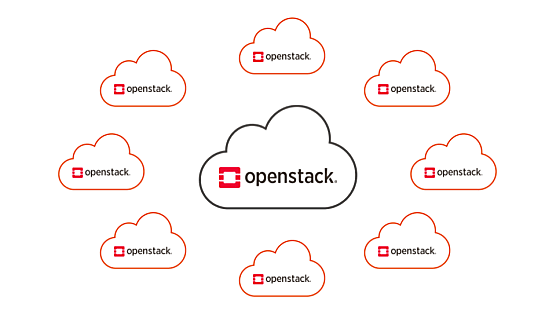
Selected by HP, AT&T, Ericsson and Rackspace, Ubuntu plus OpenStack is the platform of choice for organisations deploying private cloud IAAS today.
Widely certified and supported for the long term, Ubuntu Server is the most reliable platform on which to move from a pilot or proof of concept to a large-scale production deployment. It offers the robustness and agility you need for rapid scaling of the underlying cloud, while offering first-class support for the key virtualisation technologies that underpin successful OpenStack deployments — with the longest track record of support for KVM and LXC.
Ubuntu and OpenStack users
Ubuntu and OpenStack
Ubuntu is the reference operating system for the OpenStack project, making it the easiest way to build an OpenStack cloud, whether for private use or as a commercial public cloud offering. And you get the latest updates and security fixes fast: OpenStack is tested every day on Ubuntu by the developers of OpenStack itself, so there is very little time lag between a new patch being published for Openstack and that patch being tested and published for Ubuntu Cloud.
A vision of an open cloud
Our partners and customers want on-demand access to the fundamental commodities of IT, compute and storage. They want to be able to scale that pool of resources from departmental pilot to massive infrastructure. And they want the process to be straightforward. Most importantly, they want to cut the complexity and vendor lock-in that can hamper their ability to deliver fast, efficient service to their users.
To support that vision, clouds need to offer true computing elasticity, automated provisioning and deprovisioning, open APIs and pay-as-you-go metering and billing. Above all, they need to go beyond open standards and be fully open source. That is the open cloud.
Supported, certified and compliant
Ubuntu Cloud is built into Ubuntu Server. Like the rest of the Ubuntu operating system, it is free from licensing restrictions, enabling Ubuntu to deliver on the promise of open-source software: you can deploy as much cloud as you want without needing to count licenses, anywhere. It’s this flexibility that has made Ubuntu the rising star of large-scale deployments.
The number one guest in the public cloud
Ubuntu is the leading cloud guest across the top public cloud providers including:
How Canonical supports Ubuntu
- Ubuntu Advantage is available for your entire infrastructure or only for the portions thereof that require support
- Canonical offers enterprise-ready support agreements in the form of the Ubuntu Advantage programme: compliance, audit, management and IP assurance
- Canonical ensures that every LTS (long-term support) release of Ubuntu Server benefits from five years’ worth of free security updates.
- Canonical handles the release management and maintenance of Ubuntu
Learn more about Ubuntu Advantage Learn more about Canonical ›
Ubuntu for public cloud providers
Canonical invests in the Ubuntu experience on the leading public cloud infrastructures to provide the most complete combination of performance, update handling, compliance and reliability on those public clouds. Canonical also extends its commercial offerings of certification, management, audit compliance and IP assurance to paid contract customers using Ubuntu on those certified public clouds.
The ecosystem of software solutions, tools, developers and administration skills is deeper with Ubuntu than any other OS. In turn, this means that choosing Ubuntu as a guest on your private cloud aligns you perfectly with established best practice on the public cloud.
“At year-end 2016, more than 50 percent of Global 1000 companies will have stored customer-sensitive data in the public cloud”
Gartner
Hybrid cloud: the best of both worlds
Today’s institutions want the best of both private and public cloud. Private cloud provides control, regulatory compliance, cost management and security. Public cloud offers economic efficiency, burst capacity and disaster recovery. But they are not exclusive to one another: with careful planning and the right tools, it’s possible to scale your private cloud into the public cloud — and stay in control.
We call this hybrid cloud computing and it is the essential value proposition of Ubuntu in the cloud. We make it possible to deploy private clouds that can be connected to all of the major public clouds: Rackspace, Amazon, HP and many more.
Canonical ensures your private cloud can support the same core infrastructure APIs across all private and public clouds. For companies that want the benefits of a private OpenStack cloud, access to OpenStack-based public clouds like Rackspace, AT&T and HP, access to Amazon’s public cloud and common tools for deployment across all of them, Ubuntu offers unbeatable value and capability.
Velocity and agility in devops
In addition to the economic efficiencies of utility computing, cloud should also deliver both increased velocity of development and improved agility in deployment. Ubuntu includes a micro-cloud capability on every developer workstation, enabling developers to work on the exact same configurations that they will hand over to ops for deployment.
Juju, the service orchestration tool, dramatically reduces the friction in handovers from development to testing to production deployment. Developers use Juju with the micro-cloud on their workstations to ensure they are working in a microcosm of the production test and deployment systems.
If they are building a complex multi-tier application, they can create nodes in their workstation micro-cloud for each equivalent node in the production deployment. The changes they make to their code, especially changes in the required configuration, can be communicated instantly for test and production deployments.
Companies that embrace these tools see dramatic improvements in the re-use of deployment patterns and components between teams, and equally dramatic reductions in deployment time, making it easier to support agile development processes with very quick iterations.
Leadership in physical provisioning, with MAAS
The race to the cloud is driven by virtualisation. But cloud thinking can inform better practices for traditional on-the-metal deployments, too.
For example, modern hyperscale deployments of parallel-compute services like Condor and Hadoop have a great deal in common with cloud-style architecture. Each node is cheap, no node is special, reliability is achieved through redundancy, throughput is achieved by spreading the problem out across more nodes rather than buying a faster node. While those big data deployments are typically still unvirtualised, running directly on the metal, we can think of them as cloud-like environments.
Canonical’s Metal as a Service (MAAS) provides a physical management layer that serves up machines on demand. Together which Juju, it enables you to deploy workloads onto physical metal that have all the same behaviours as workloads in the cloud, without the virtualisation layer.
“By 2014, the global cloud computing market will be worth $148.8 billion”
Gartner